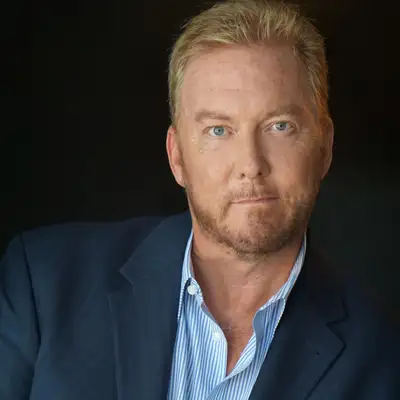
Jim McAleer - President & CEO of Alzheimer's Orange County
Memory may go, but your reflectional memory on art and music lasts longer. When I first started in this position, I was looking at a piece of art that one of our family members had done, a person with memory loss, and I was condomining her on it, that it is absolutely beautiful. Is it fireworks? And she looked at me and said, I don't know. And then she turned it upside down and you could see the face of a woman.
Jim McAleer:She goes, maybe it's a woman. And she had painted. But it was fascinating just the perspective because it... She wasn't upset about the fact that she wasn't clear exactly what it was. She was enjoying the experience of painting, and I was just very clear that perhaps the act of painting was important as the product itself.
Jim McAleer:We have folks who are not verbal, but they can actually paint something that you can tell what it is. A cabin from their youth or a flower, yet they're not verbal any longer.
Producer:Welcome to Impactful Breakthroughs, the podcast dedicated to the incredible individuals who are shaping the future of medicine. You just heard a snippet from today's guest, Jim McAleer, President and CEO of Alzheimer's Orange County, an independent nonprofit providing care, education, and support services to families living with Alzheimer's disease and other dementias. Jim has led the organization for the past twenty two years and has brought two licensed adult day health centers under its roof. His work expanding Alzheimer's OC has led to the organization now reaching more than 30,000 people a year. Today, you'll hear what initially sparked Jim's interest in dementia care, the immense privilege he feels being let into people's lives at their hardest moments, and how no trial succeeds without the trust of the families affected.
Producer:And now, your host, Laura Brencher, VP of patient advocacy at Leapcure.
Laura Brencher:So, yeah, Jim, welcome to the show. It's great to have you on, and I've personally been really excited about the conversation ever since we got connected. And first of all, I'd love to start with just hearing about how you got into the space of advocating for families with Alzheimer's disease and really becoming someone that the community really trusts.
Jim McAleer:Thank you. Well, it's delightful to be here. So I've been in the nonprofit space for more years than I care to count. Let's just call it many decades. Twenty two years here at Alzheimer's, Orange County.
Jim McAleer:So what started me in this space was I was actually adopting a child, and I was consulting throughout the country and decided I really needed an office at the end of the hall if I was gonna try and raise a youngling. This was the first job I applied for. Both my grandmothers had different forms of dementia, so it was a natural fit for me. But then pretty quickly, I started meeting family after family after family. It became less about my personal experience than it did about the people we serve every day.
Jim McAleer:You become such an integral part of their lives, what's happening with them at such a vulnerable time that it's really hard not to be emotionally connected to the people you serve and and the work we do.
Laura Brencher:Yeah. I can completely see that. I mean, twenty two years is a long time as well. I'm just curious. The space must have changed a lot in that time.
Laura Brencher:You only... The kind of perspectives on where it was versus where it is now. What's changed the most?
Jim McAleer:The interesting thing for me, one of them at least, is when I started, there was going to be a radical, if not cure, disease modifying medication expected within the next eighteen months. That was true for probably the first fifteen years of my career, and it never came. We had things like a Russian antihistamine, Dimabond, that was going to be the next great drug, and then another one, and then another one. In the last several years, we've had two disease modifying medications that released, and I'm kind of hoping that those become the dominoes that start a cascade of useful medications that slow progression. Everything we had for that worked on symptoms, not pathology, right?
Jim McAleer:So that might help a little bit with symptoms, but it's pretty modest. And even the drugs we have now that work on progression, it's a pretty modest lift. That said, a modest lift is better than no lift, and we're waiting to see what's gonna happen in the drug space as we move forward. But there's a ton... There's more drugs in the Alzheimer's pipeline right now in research than any other disease condition, so there's hope there.
Laura Brencher:Yeah. I've been in the space for eight years, and I I think this is one of the condition areas I kind of watch the most, because I think there's been so many kind of almost, or maybe that's hopeful, and I think... It feels like we're really close, and to your point, there's so much in the pipeline that that feels like it's true, so we'll see. But, yeah, it's definitely been a super dynamic, and there's a lot of activity in the Alzheimer's space.
Jim McAleer:For sure. And I think we're learning, the more scientists I talk to, and certainly I talk to quite a few and and quite often, we're learning that you have to get into the space earlier. You have to get ahead of the disease if you really wanna have an impact. So whether you're talking about beta amyloid or tau tangles or inflammation, kind of the three hallmarks of most dementias, not all, but most, getting ahead of it before brain damage really occurs appears to be where most science is leading us. We're just not quite there yet.
Laura Brencher:Yeah, and I'd like to talk about research a little bit more in a little while, but I wanted to talk about the condition itself first. I know, yeah, just in terms of the Alzheimer's community, it's an umbrella term, I would think, but who's in it? Who tends to get left out of the picture? You mentioned dementia. I think just kind of speaking a little bit more to kind of the community as a whole and who we're kind of talking about today would be helpful.
Jim McAleer:Certainly. So so the real umbrella term is dementia. Yeah. If you think of dementia like cancer as the overarching term, it's an overarching term that really means a neurological condition that impairs your brain function. So there's Alzheimer's dementia, which is the most common form of dementia, then there's vascular dementia, the second most common form.
Jim McAleer:Often, by the way, there are multiple dementias present in the same human at the same time. There's Lewy body dementia, there's frontal temporal, AIDS related, alcohol related. There are many different types of dementia, and what we're learning as more and more celebrities, as more and more famous people, Bruce Willis, example, Robin Williams, become impacted by these diseases, the public scrutiny, the public awareness of them grows, not necessarily an understanding of the specificity behind each disease condition. Right? So at the end of the day, our organization, and many like ours, will serve anyone with a memory impairment, and we'll figure out what that looks like, but the memory impairment is really what we are treating and managing in that human and their caregiver.
Jim McAleer:What does their caregiver need to provide competent care while caring for themselves? It's the old adage of, if you're on an airplane, put the oxygen mask on you first and then your loved one. Same truth for caregiving.
Laura Brencher:Yeah. That makes a lot of sense. And to share with you, well, you mentioned your grandmother's having a form of dementia each. I kind of share that experience with you. So my grandmother growing up had Alzheimer's specifically, and the caregiver perspective is the one I kind of was closest to with my parents, and I think that is maybe a really misunderstood area about kind of how much is involved and what it really takes to kind of be a good caregiver for someone with Alzheimer's and how long that process goes on for.
Laura Brencher:So yeah, if you're able to kind of speak to the caregiver experience from your perspective as well, you know, personally and professionally, I think that could really help people too.
Jim McAleer:So first of all, we know that the pathology for Alzheimer's dementia in particular can be in the body for fifteen or twenty years before it really starts showing up. So when it starts showing up, family members and the person impacted don't always know what it is. You know, they think maybe it's normal aging, etcetera, etcetera. Personally, my grandmothers were certainly a part of my experience watching my mother as a caregiver, but shortly after I became in a relationship with my partner, his sister acquired younger onset dementia. So that's before 50.
Jim McAleer:And she had two teenage children and lived three doors down from us. So watching her battle what's called posterior cortical atrophy, it was a dementing condition, and watching that decline from a personal standpoint really cemented why I do what I do and why we do what we do. Because you would think with all the resources that I have, that journey would be easier. Yeah, I'm not sure that it was, it was just our journey. Every single person with dementia has their own unique experience, as does their caregiver.
Jim McAleer:Most of what we try and focus on is trying to make sure that that person is carving out enough time for themselves, that they're getting some kind of respite, and that they're safeguards in the home so that the person is not 20 fourseven on duty.
Laura Brencher:Yeah, that makes a lot of sense. I was going to ask, I'd love to hear about what's the hardest part for families, and where do they get the least support, or where could there be more support, and maybe it is just that kind of support, and so they can take time away. It's a very time intensive and emotionally intensive process and supportive process. So, yeah, don't know if you're kind of on the same page there in terms of the hardest part and where they could get more support, it being, yeah, that time away, perhaps, is where it is.
Jim McAleer:I think that's one of them, but I also would say every caregiver has their own piece that's the hardest for them. If you're a spouse, for example, and you've been in a marriage for sixty, seventy years, and you're watching the person you love slowly forget what they had for breakfast, and then eventually forget your wedding, and then eventually forget your name, those are incredibly impactful moments in time. The different moments that are more impactful, it might be taking the car keys, it might be the person needing to be placed in a residential facility. What's hard for me may not be what's hard for you. It could be as simple as when they forgot a key moment in your life together, a child with a parent and that parent forgets the grandchild's name.
Jim McAleer:Those things can be incredibly impactful, but trying to create permission for a person who is a caregiver to take time away can be difficult.
Laura Brencher:Yeah, because I bet that there's a lot of guilt that comes with that as well, and people don't really want to do it. But it's like you said about putting the oxygen mask on first is the metaphor I think of, so it's really hard for people to kind of feel that permission. So I think it's really great that you kind of help people on that journey to understand that that's okay, and that's best for the patient as well at the end of the day, as well as for the caregiver.
Jim McAleer:One of the things our care managers will often tell people is, it's okay for this to suck. Yeah. It's really okay. It's okay to be tired, it's okay to be cranky, it's okay to be angry, it's okay not to have patience every moment of every day. Raising a troubled child is a journey that has its pitfalls.
Jim McAleer:Well, caring for a person with dementia as they slowly decline has its own pitfalls, and making sure that you have permission for it to suck, and have bad moments and bad times is helpful. At least we think it is.
Laura Brencher:Yeah, it definitely sounds it. And you mentioned care managers a couple of times, and so, yeah, I'd love to if you wanted to share more about what the organization does and what the care managers do, I think that'd be really good.
Jim McAleer:Sure. So Alzheimer's Orange County, we're at alzoc.org. We help anybody anywhere, by the way, but we focus on Orange County, California. So I do have a helpline. We have care consultants who will bring a family in sometimes or do something like this via Zoom to help create an action plan of what's gonna happen next.
Jim McAleer:Unfortunately, too many people come to us too late in the process for us to really be as helpful as we'd like to be. The earlier the process we can engage with a family, the more impactful those care consultations are. Cause we can talk about, let's have conversations now while the person can participate, as opposed to the person can't participate when they come in the door, right? So those are helpful conversations. We have everything from faith based services once a month for folks who really can't participate at their faith center anymore.
Jim McAleer:I have a day center that has over 300 people a week who come, get picked up at home, come for the day, occupational therapy, physical therapy, and really the recreational therapy is probably their favorite part, while their loved one has time to go to the grocery store, or get their hair done, or take a nap. So all of those programs are important. We serve about 30,000 people a year here in Orange County. Out of a population of 3,000,000 and an impacted... We have about a 164,000 people with memory loss here.
Jim McAleer:So we're not there yet. With only thirty thousand per year, but a 164,000 impacted, you can imagine there's still a lot of ground to cover. And in The US, there's probably over seven million folks with some type of memory impairing condition.
Laura Brencher:Yeah. It's a lot.
Jim McAleer:If we look at worldwide, just think about the baby boomers, That population, the first one turned 65 in 2011. Well, we're years past that, so they're in their seventies. They're pushing into their eighties, where one in three at 85 will have some form of significant memory loss. That's a big chunk of our population.
Laura Brencher:I was thinking as you were talking about the recreational activities as well, they... I think you said they connect well with it, and I'd love to hear more about that. Because from our end, this isn't just in relation to Alzheimer's, but I know maybe it's particularly important in Alzheimer's and dementia that people connect with art and music as a way as kind of a therapy. And I know, and I'm really curious to hear more from you about how that looks with Alzheimer's and dementia patients. Are you seeing the same thing with art and music?
Laura Brencher:Is that part of the recreational activity side of things?
Jim McAleer:Oh, 100%. So we actually have an entire program called Connect to Culture, where a person with memory loss and their care partner will go to the museum in a group, but the docents have been trained to go a little slower, to keep it a little simpler. They'll go to a symphony in a smaller room, a more contained environment, so there's not so many distractions. But we find that folks connect to a few things longer in this process than others. So memory may go, but your reflectional memory on art and music lasts longer.
Jim McAleer:That's why the faith services are so important, because people ingrain in their religion, if they choose to have one, pretty early in their lives. So they may not be speaking any longer, but they'll come in and all of a sudden the Lord's Prayer verbatim comes out of their mouth, or amazing grace, or whatever it is for them. I'm not espousing a face center, I'm just saying that is a place where memory seems to last a bit longer, and it's absolutely true for music, and it's absolutely true for art. We have folks who are not verbal, but they can actually paint something that you can tell what it is.
Laura Brencher:Yeah.
Jim McAleer:A cabin from their youth, or a flower, yet they're not verbal any longer.
Laura Brencher:Yeah. It's it's pretty amazing, and, yeah, hopefully we'll kind of learn more about that during the research process over the next years, but I do remember my my grandmother doing kind of the later stages, still knew all the piano songs, and she would come in and play them, and it was it was perfect. And so it's pretty pretty amazing to see as well, isn't it?
Jim McAleer:When I first started in this position, I was looking at a piece of art that one of our family members had done, a person with memory loss, and I was complimenting her on it, that it is absolutely beautiful. Is it fireworks? And she looked at me and said, I don't know. And then she turned it upside down, and you could see the face of a woman. She goes, maybe it's a woman.
Jim McAleer:And she had painted it. But it was fascinating just the perspective, because it... She wasn't upset about the fact that she wasn't clear exactly what it was. She was enjoying the experience of painting, and I was just very clear that perhaps the act of painting was important as the product itself.
Laura Brencher:I love that. We just touched on research just then and earlier, and I'd love to go back to it a little bit more because I'm really curious, you know, how your organization connects families to research. You know, I can see there's been a lot of connection already, and I just would love to hear your perspective about kind of how you connect with the research world and how that's important to you, and maybe even, you know, where it breaks down. So a bit of a bigger conversation to have, but, yeah, just love your perspective on this as well.
Jim McAleer:Sure. Research clinical trial, a stage three, the last stage before in the US FDA approval, can cost upwards of $50,000,000. So an organization like mine that's between 8 and 10,000,000 is not gonna fund international level research. But what we can do is science doesn't happen without, as they say, butts and seats, without people willing to participate in clinical trials. So we do a lot of education about what it's like to participate in a trial, what questions you should be asking, how people are screened, and connecting folks with different trial companies, with different trial entities.
Jim McAleer:We have a wonderful organization here in Orange County called UCI MIND, University of California Irvine, and its Institute for Brain Health, so we connect folks there as one of our places. The Alzheimer's Association has an online program called Trial Match, so we're for people there to try and get more and more people to consider signing up for a trial. Healthy folks, caregivers who are worried about their own memory, as well as people experiencing memory loss.
Laura Brencher:Yeah.
Jim McAleer:So there's that part. The other part is we do an awful lot of training. So when you think about folks looking at what's being written in our lovely media in this world, they love to blow on a flame that is about this big as if it was a bonfire, meaning they take a very small phase one study that's in rats or mouse models, and they'll talk about it as a potential cure, you're like, that is so far away from us knowing anything other than interesting. Then when you get to phase two where it's, you know, it might be six people, it might be a 100 people, but not probably more than that, and they're just checking dosage and safety. Interesting.
Jim McAleer:Now when you get to phase three and you start hearing results, then you can sit up and and pay attention. But we have to educate our families when these articles come out, when these news stories come out with this great promise, hope is wonderful, false hope is not. So we do a fair amount of work on trying to educate families on where to look for good, competent information, and how to question what they read and what they see.
Laura Brencher:Yeah. It makes a lot of sense. The role that advocacy organizations play in between research and patients is is critical, and that's kind of the reason we do what we do as well. But I was really curious from your perspective, what a good partnership between your organization and a sponsor or pharmaceutical organization looks like, because a lot more of them are working with advocacy organizations, which is great. But, yeah, just in your experience, what a good partnership between you and a sponsor would look like, I'm really curious about that.
Jim McAleer:So when you think about an organization like yours or an Eisai or Lilly or any one of the number of drug companies, you are probably not the entity that a person with memory loss or their caregiver are going to have a trusted relationship with. You're a company. My organization, they are going to have a trusted relationship with over time that is built with that care partner. So what we bring to the table is the trust of the people we serve. That trust can be a conduit to get them connected to a company like yours, or like Eli Lilly, or whomever, so that they can comfortably and knowingly participate in research.
Jim McAleer:I think the more the pharmaceutical industry and the conduits to the pharmaceutical industry recognize that the trusted community organizations are their real best chance to get people into trials, the better off they'll be. Of course, we also wanna cash the check.
Laura Brencher:But they've to keep the lights on. Got to be able to support, or you need capacity to run all the programs you run-in. It makes complete sense. I... And, you know, something that always comes up for me is, like, and I think you've alluded to it, but transparency from the research world as well, so you can kind of share the reality and the truth with your communities as well, and I think giving you the information to be able to speak to your communities and say, here's what's happening, whether it's kind of public or not sometimes, and I think that's really important.
Laura Brencher:So, we've seen sometimes there'll be a webinar right around the time of the results being published, and that's kind of a webinar for your communities, and they'll come and they'll speak about what the results really mean, and I think things like that go a long, long way to build in kind of the trust in the company a little bit as well. So, yeah, it's... I see more and more of that, which I think is really good. But I do think transparency in so many ways is is definitely key to keeping this going well.
Jim McAleer:Education and transparency, both. I would agree. And it really does boil down to trust.
Laura Brencher:Yeah. I'm just curious from your perspective as well then, and maybe this is hard to say as, like, a a general thing, but what do you hear from families about why they do or don't participate in trials? And maybe there's no one answer to this, but if there is anything that comes to mind.
Jim McAleer:I think there's some themes, I think, particularly for the multicultural community, language barriers can be a significant issue. Yeah. And the trust factor is even higher in those communities, the barrier of non trusted partnerships. So I do think that for multicultural communities, language is a barrier and culture can sometimes be a barrier. For the general population, I think a lot of it is simply education.
Jim McAleer:Am I going to get a placebo? Am I going to get an actual drug? Is it going to work? Well, we don't know, that's what we're testing for. So you might be in a two year clinical trial, well, you're gonna wanna know what the impact of that is on your brain and your body, and we may not really know, that's part of what we're testing for.
Jim McAleer:So some people participating in clinical trials are doing so for the greater good, not necessarily because it's going to help them in their journey, and they know that. That's a harder ask of people than come and it might really help you personally. Right? So trying to figure all of that out and getting past those barriers, I think, can sometimes be difficult. Yeah.
Jim McAleer:In fact, I know it can be difficult.
Laura Brencher:Yeah. I totally agree. We definitely see a mix, and I... You know, this is speaking from, you know, a few Alzheimer's and dementia trials that we've been lucky enough to work on. I think some of the the insights we do see is based around exactly what you just said, and some people don't say, this is going to be a game changer for me, and those people are just doing it to leave everyone else better off, it's really moving, it's really incredible, and there's a lot of that that happens, so, yeah, just in general, a really incredible community, I think.
Jim McAleer:Yes. Right? I mean, I get allowed into people's lives at some of the toughest times for a family. So being able to do that is is a huge privilege. But I'm still running a company like any other company.
Jim McAleer:I simply have a product that I believe is more important than most, you know, the service that we deliver. But at the end of the day, I still have to raise $8,000,000 a year to $10,000,000 a year. I still have to worry about contract law, human resources issues, all of those kinds of things in an ever changing environment. If you look at the political tensions, not just in our country, but globally right now, there's so much white noise in the space, buzz, things that grab people's attention and take them away from causes like ours because they're too busy. Oh, look over there, look over there.
Jim McAleer:There's so much competing for our attention that when you're trying to run a charity and get people to focus on your cause and what you're doing, There's an awful lot that distracts people, not just other charities, but life in general I think is remarkably distracting for all of us right now. There is more tension in the air, I've just turned 60, and there's more tension in my sixtieth year than I remember in any other decade of my life. I think that's probably what makes running any business right now, but a particular charity, challenging.
Laura Brencher:Yeah. It makes complete sense, and people care, they want to support as much as they can, and sometimes they just can't, and sometimes they're given a lot of areas that need support to your point, and it's it's really difficult, I think. I I can imagine that being a a constant battle that is not getting any easier. So, yeah, that makes a lot of sense.
Jim McAleer:Certainly. I mean, do I give to the homeless? My child has autism. My mother has dementia. I believe in literacy programs, historic preservation.
Jim McAleer:The list goes on of of wonderful things to... Orphanages in Mexico, whatever moves you to give or to give your time. There's a lot of competing issues, but there's also simply life. You know, raising your family, going to work that can get in the way of trying to be that benevolent person that that you hope to be.
Laura Brencher:Yeah. I suppose, you know, with all the ups and downs and ebbs and flows of of kind of leading an organization in these times especially, there's... What's driving you really is the core and real commitment to what you what you do, so I can see that in abundance, which is great. But, yeah, I can imagine it's it's really tough sometimes.
Jim McAleer:I very much believe in the work we do, and I'm very fortunate to have the team that we have to help do that work. At the end of the day, this is a lifestyle, not a job. And I think that's probably true for most nonprofit employees, be they the CEO or be they an entry level administrative support person. It is a lifestyle. You certainly don't do it for the giant paychecks.
Jim McAleer:At the end of the day, you do it because you believe in what it is that that group, that organization is accomplishing and changing in the world. So I do see that change. I do see the positive impact in what we do, and that is what keeps you motivated through all of that white noise and distractions and other things. Right? So whatever the cause is, I think that the lifestyle makes it palatable.
Laura Brencher:Yes. It's a vocation, isn't it? And real real commitment, I can I can tell, comes from really genuine place? And so that's why I was really excited to talk to you today as well. I can kind of feel that every time every time we do connect.
Laura Brencher:I was curious, you know, from, like, an individual lens as well for you, is there, like, a real career highlight when you... While you've been doing this work, something you're especially proud of? I'd love to to hear if there is.
Jim McAleer:You know, I thought about this because you you kinda warned me you might ask a question like this, and then I really thought about it. And it used to be I had one or two different things. We, during COVID, created a facility for people who had dementia and were COVID positive, but couldn't go back home, but didn't need the hospital. Because I don't know about where where you're from, but in Orange County, we literally had tents in the parking lots of hospitals. So for our folks, that is incredibly disorienting.
Jim McAleer:Yeah. So that was a really special thing to be able to do. But honestly, the more I look at it over time, it's really just the work in general. All the different times I've sat next to a hospice bed, the very last days of someone's life, and a family has allowed me to participate in that process because they might not be comfortable giving the morphine or holding the hand for a last breath. Those kinds of things sound terribly tragic and sad, and in some ways they are, but they're also an incredible privilege.
Jim McAleer:So singling one out, there's really not one. It's a twenty two year life cycle of being able to participate and watch and, in some small measure, help.
Laura Brencher:Yeah. That's a lot of lives impacted and things learned, I'm sure all of them impacted you just just as much, so that makes a lot of sense.
Jim McAleer:Definitely. I have both the scars and the trophies in equal measure. Right?
Laura Brencher:Yeah. Yeah. That makes complete sense. Yeah. Is there anything before you came in you really wanted to kind of share that we haven't touched on I haven't asked you about?
Jim McAleer:You know, we've covered a lot of ground, and I thank you for that. I do always mention our our websites, alzoc.org, so folks can go there for a host of information wherever you live, wherever you work. There's a ton of videos and fact sheets that should be helpful, and we do serve anyone anywhere as best we can, although our focus is Orange County, California. But at the end of the day, go find a place to plug in, find a place to give an hour, give a dollar, give a moment, And if nothing else, give a good thought.
Laura Brencher:Yeah. No. I love that. And and before we do wrap, love to give you a chance to kinda shout out a few people who've made meaningful difference on your journey. So, yeah, maybe they're mentors, maybe they're, you know, folks you work with, or maybe they're behind the scenes personal supporters.
Laura Brencher:But, yeah, whoever comes to mind, feel free to shout those people out as well before we wrap.
Jim McAleer:First and foremost, the staff that work for Alzheimer's in Orange County are the best in the world. I am incredibly gifted with, and there are too many of them to name. As far as professional mentors, I have a number, Doctor. Josh Grill at UCI Mind, Doctor. Aaron Ritter at Hogue, Doctor.
Jim McAleer:Trinh, a number of clinicians and scientists who I respect and admire very, very much. But at the end of the day, it comes back to what I said earlier, it's the caregivers and the people with this disease who plod through their lives and just keep going, one foot in front of the other. Those are the folks that both empower me and inspire me every single day. It's the the folks in the street doing the real granular work.
Laura Brencher:Yeah.
Jim McAleer:Oh, and my mom.
Laura Brencher:Got to. Yeah.
Jim McAleer:She put up with a lot. Still does.
Laura Brencher:Well, yeah, for me, I think that that's kind of a wrap on this episode of Impactful Breakthroughs, and yeah, heartfelt thank you, Jim. I think your story is a reminder for me of how much a family leans on advocacy organizations from the moment of diagnosis, and really how much trust that takes. And so, you know, the research world does its best work when it kind of stands alongside organizations like yours. So, thank you for kind of coming to talk to us today and and sharing as much as you have.
Jim McAleer:Thanks for the opportunity. Anytime.
Producer:That's a wrap on this episode of Impactful Breakthroughs. A heartfelt thank you to Jim McAleer for showing us just how much a family leans on advocacy organizations from the moment of diagnosis and how much trust that takes. Jim's story is a reminder to us all that the research world does its best work standing alongside organizations families already turn to. The more we strive to understand the wants and needs of each individual patient, the more positive change we can enact. If today's conversation sparks something in you, be sure to subscribe, share, and connect with us for future episodes.
Producer:Until next time, stay informed, stay engaged, and keep pushing for better health outcomes for all.